Resources
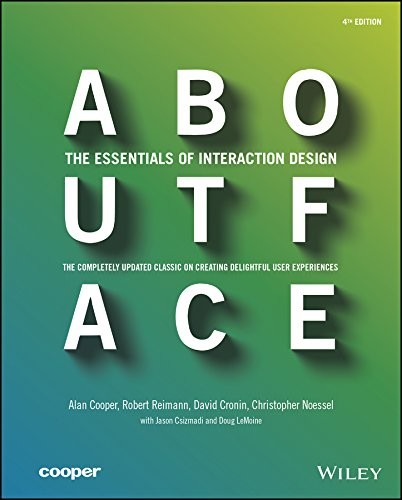
by Alan Cooper
The foundational text on interaction design. Cooper argues that software should be designed around goals rather than tasks or features, and introduces personas, goal-directed design and the distinction between what a product can do and what a person is actually trying to achieve.
Key Concepts
Goal-Directed Design
Design for the user's end goal, not the sequence of tasks they currently perform to reach it.
Personas
Concrete, research-grounded archetypes that keep a team designing for a specific person rather than an average.
Beginners, Intermediates, Experts
Most users are perpetual intermediates — optimise for them without blocking the other two.
Postures & Platforms
How much of the user's attention a product deserves should shape how its interface behaves.
Don't Make the User Pay
Software should not force people to compensate for decisions the software could have made itself.
Value & Benefits
Goals Over Features
A defence against feature lists that grow without ever making the product more useful.
Designing for Real People
Personas turn arguments about preference into arguments about evidence.
Interaction Patterns
A deep catalogue of behaviours and controls, and when each one is the right choice.
Language for Critique
Precise terms for describing why an interface feels wrong, not just that it does.