Resources
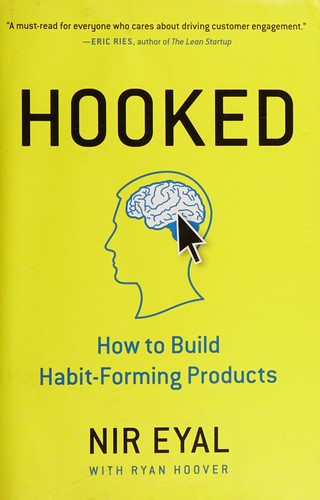
by Nir Eyal
Eyal's Hook Model explains how products build habits through repeated cycles of trigger, action, variable reward and investment. It is the most directly persuasive book on this shelf, which is exactly why it is worth reading carefully — the same mechanics that make a product genuinely useful can be turned on the user.
Key Concepts
Trigger
External cues start the loop; internal cues — usually an emotion — are what make it self-sustaining.
Action
The simplest behaviour done in anticipation of a reward. Reduce the effort and the behaviour becomes more likely.
Variable Reward
Unpredictable payoff sustains engagement far longer than a consistent one. The strongest lever in the model.
Investment
Users who put work in — content, contacts, preferences — load the next trigger and raise the cost of leaving.
The Ethics of It
Eyal's own manipulation matrix asks whether you would use the product yourself and whether it materially improves the user's life.
Value & Benefits
Why Retention Happens
Explains engagement as a designed loop rather than an accident of good content.
Reading Your Own Metrics
Gives structure to questions about why users return, or stop returning.
Recognising Dark Patterns
The same model that describes habit formation makes exploitative design easy to spot.
A Line to Hold
The ethical framing is a practical test for whether a retention feature deserves to ship.