Resources
by William Lidwell
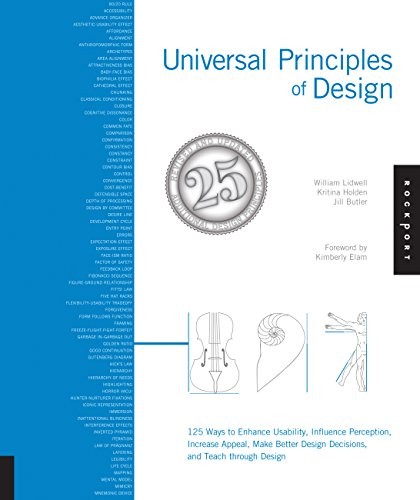
A reference rather than an argument: 125 principles drawn from psychology, architecture, engineering and graphic design, each on a single spread with an example. It is the book on this shelf you return to rather than read through, and it consistently supplies the name for something you already half-knew.
Key Concepts
Signal-to-Noise Ratio
Every element that carries no information competes with the ones that do.
Progressive Disclosure
Show only what is needed now; reveal complexity as the user asks for it.
Recognition Over Recall
People are far better at recognising something shown to them than retrieving it from memory.
The Von Restorff Effect
The item that differs from its neighbours is the one that gets remembered.
Constraints & Forgiveness
Limit what can go wrong, then make whatever does go wrong easy to undo.
Value & Benefits
Names for Instincts
Turns 'this feels off' into a principle you can point at and discuss.
Cross-Disciplinary
Draws from fields outside software, which is where a lot of the better analogies live.
Built for Reference
One principle per spread makes it fast to consult mid-project rather than read cover to cover.
Defensible Rationale
Each principle comes with the research behind it, which helps when justifying a decision.