Resources
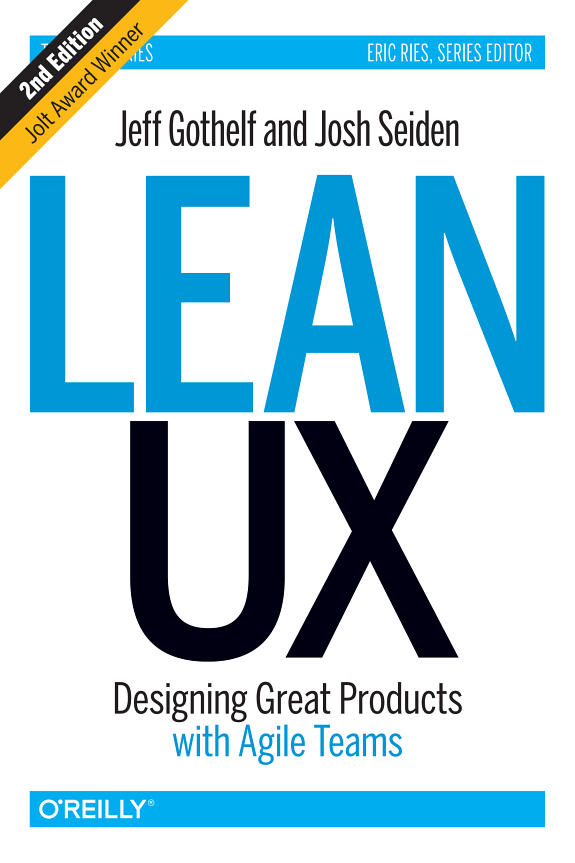
by Jeff Gothelf & Josh Seiden
Lean UX focuses on applying Agile principles to UX design, encouraging collaboration and iterative development to build better products faster. It emphasizes cross-functional teamwork, continuous feedback, and validating assumptions through experimentation.
Key Concepts
Collaboration
Breaking down silos between design, development and product teams.
Design as a Hypothesis
Treating design ideas as testable hypotheses rather than final answers.
Rapid Iteration
Releasing early versions of products to gather real user feedback.
Outcome-Based
Focusing on outcomes rather than outputs, ensuring design solves real user problems.
In their words
“Design is a hypothesis, not a solution.”
“Outcomes, not outputs.”
“Lean UX favors learning over delivery.”
“Collaborate with your team to create the solution — don't hand it off.”
Value & Benefits
Enhanced Collaboration
Foster better collaboration between designers, developers and product managers by breaking down silos.
Rapid Iteration
Quickly iterate on designs by getting early feedback from users, improving on real data rather than assumptions.
Learning from Failure
Treat design as a hypothesis to be tested — failures become learning opportunities.
Focus on Outcomes
Shift from delivering outputs to achieving results — solving user problems and meeting business goals.
Flexibility in Agile
Integrate design work seamlessly into Agile workflows, staying adaptable to change.